
Tuning forks are precise diagnostic instruments that are indispensable in medical examinations. These tools are used to assess vibration sensation, known as pallesthesia, and play a crucial role in diagnosing hearing disorders, particularly through the Rinne and Weber tests. In medical practice, tuning forks also enable the quick and effective detection of fractures, ensuring timely and appropriate intervention.
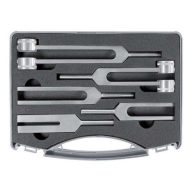
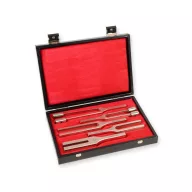
Tuning fork set - 5 German

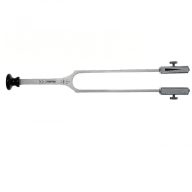
Riester steel ear-nose-throat tuning fork - C, 128Hz


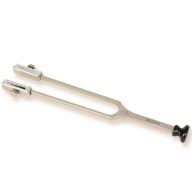


Riester aluminium ear-nose-throat tuning fork - C-1, 256Hz
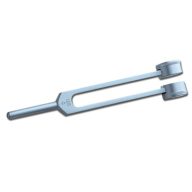

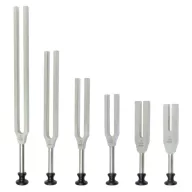

Riester Aluminium ear-nose-throat tuning fork - C, 128Hz

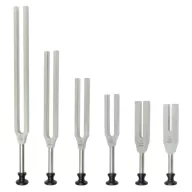


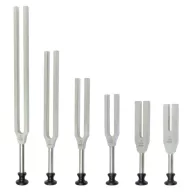


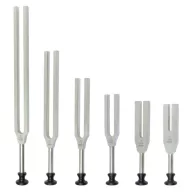

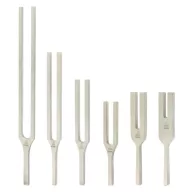
KaWe Hartmann tuning fork (Without stand, with different frequencies) - c 128 Hz

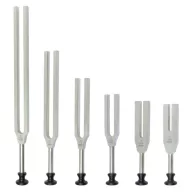


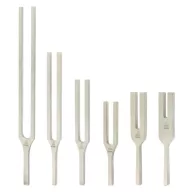
KaWe Hartmann tuning fork (Without stand, with different frequencies) - c3 1,024 Hz

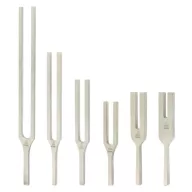
KaWe Hartmann tuning fork (Without stand, with different frequencies) - c1 256 Hz

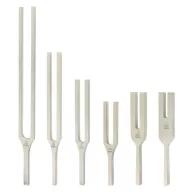
KaWe Hartmann tuning fork (Without stand, with different frequencies) - c2 512 Hz


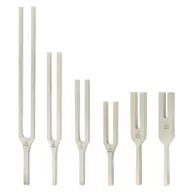
KaWe Hartmann tuning fork (Without stand, with different frequencies) - c4 2,048 Hz


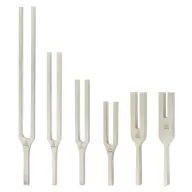
KaWe Hartmann tuning fork (Without stand, with different frequencies) - c5 4,096 Hz

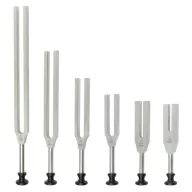
Tuning forks are available in various frequencies, each serving different diagnostic purposes. In medical settings, the most commonly used frequencies include 128 Hz, typically employed in neurological examinations, and 256 Hz and 512 Hz, often used in hearing evaluations. These instruments are essential not only for professionals but also for medical students, as they aid in the practice and development of clinical skills.
Tuning forks are utilized across many areas of medical practice, including otolaryngology, neurology, and orthopedics. Their use is straightforward yet highly effective, allowing doctors to make quick and accurate diagnoses. For physicians, tuning forks provide a practical and portable solution, which is especially important for examinations conducted in various locations.
Constructed from durable materials, tuning forks ensure longevity and reliability during medical examinations. It is crucial to apply the correct technique when using these tools to ensure that the results of the assessments are accurate and dependable.
Overall, tuning forks are indispensable tools in medical diagnostics, contributing to the precise assessment of patients' conditions and the development of appropriate treatment protocols. These tools are vital not only for hospitals and specialist clinics but also prove useful in general practice, aiding in everyday medical activities and patient care. The use of tuning forks allows doctors to provide the highest quality care, ensuring patients' health and well-being. Thus, tuning forks hold a prominent place among medical tools and contribute to the advancement of medical science.


