NEW
Item number:
WINTER383185
TEST FOR COLOUR DEFICIENCY - 10 plates - paediatric
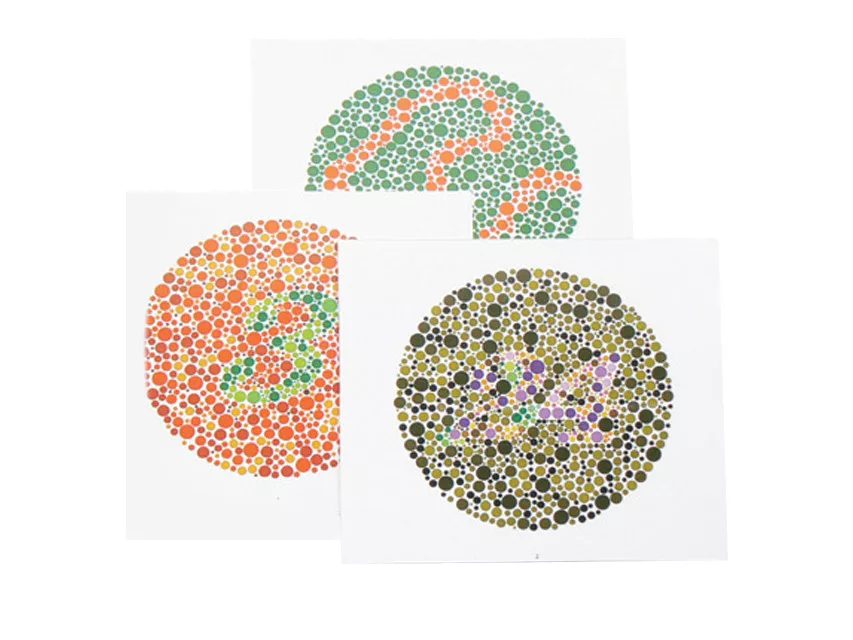
The Pediatric Colour Vision Test is a simple and practical screening tool designed to assess congenital colour vision deficiencies in children, particularly red-green colour vision deficiency.
The paediatric version is specifically designed for children aged approximately 4 to 6 years and for individuals who are unable to read numbers or letters. Instead of relying on numerical recognition, the test uses easy-to-identify shapes and curved lines, making the examination easier to understand and perform with young children.
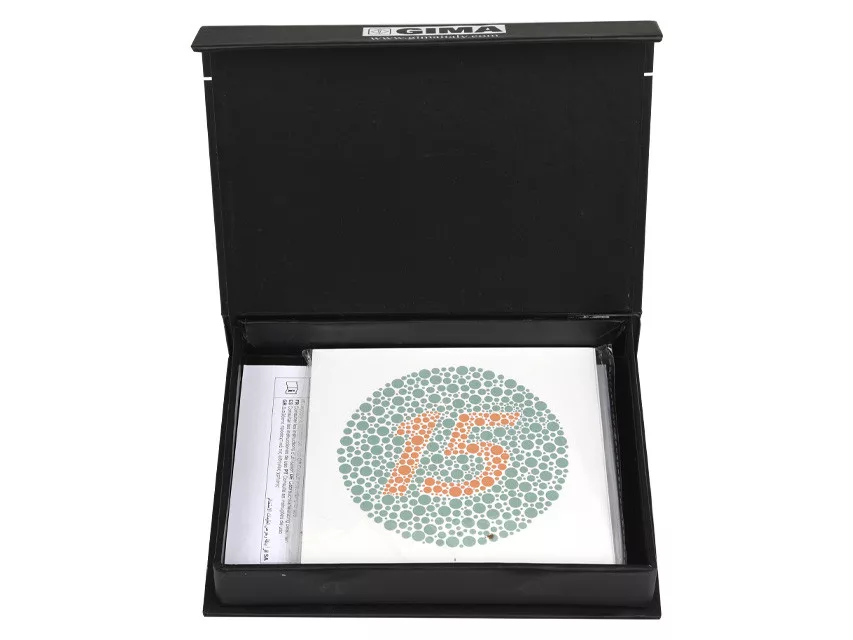
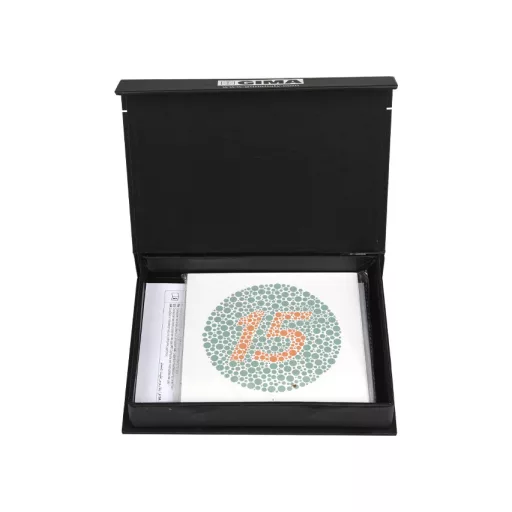
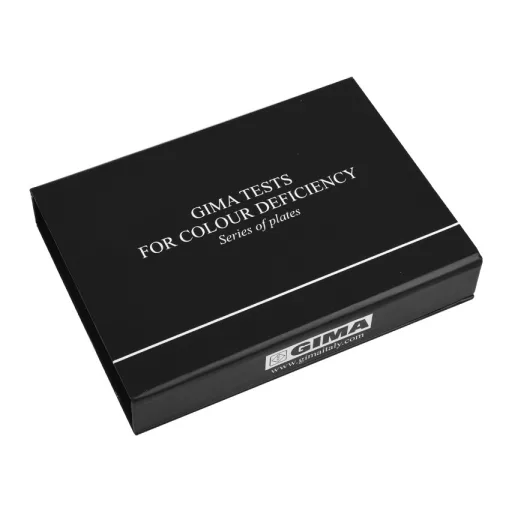
The set consists of 10 individual colour test plates, each measuring 11.5 × 11 cm, supplied in a practical cardboard storage box.
The paediatric version is specifically designed for children aged approximately 4 to 6 years and for individuals who are unable to read numbers or letters. Instead of relying on numerical recognition, the test uses easy-to-identify shapes and curved lines, making the examination easier to understand and perform with young children.
The set consists of 10 individual colour test plates, each measuring 11.5 × 11 cm, supplied in a practical cardboard storage box.
In stock
Stocks
Winterthur Medical webshop warehouse - W00
In stock
37.21 $
Related products
Details
Main Features
* Paediatric colour vision screening test
* Designed for children approximately 4–6 years of age
* Suitable for individuals who cannot read numbers or letters
* Helps assess congenital colour vision deficiencies
* Particularly useful for screening red-green colour vision deficiency
* Uses simple shapes and curved-line tracing instead of numbers
* Includes 10 individual test plates
* Individual plate size: 11.5 × 11 cm
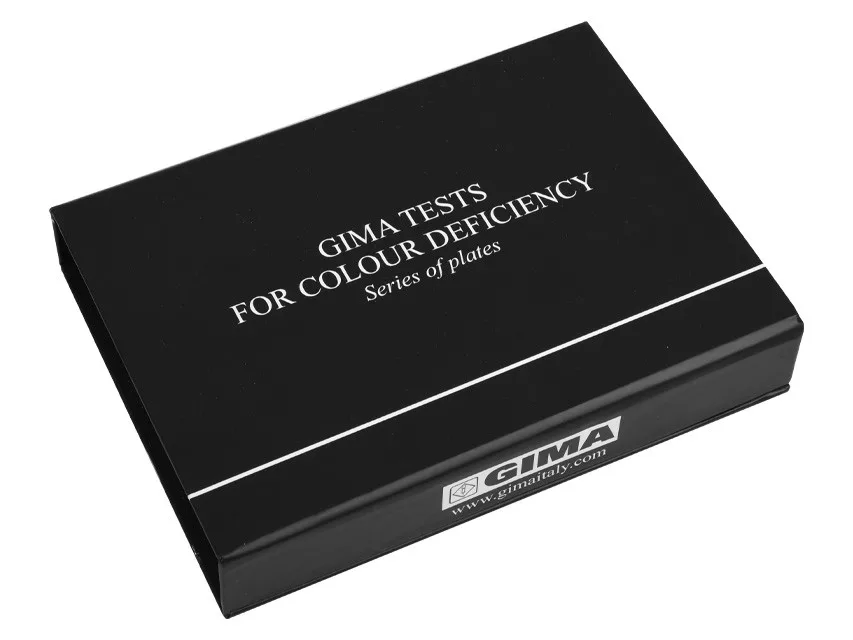
* Supplied in a practical cardboard storage box
* Medical device, Class I
* Multilingual packaging and instructions
How the Pediatric Test Works
The examination is divided into two main parts.
During the first part, the child becomes familiar with three easily recognisable shapes: a star, circle and triangle. The first plates are used to ensure that the child understands the task and can correctly identify these shapes.
Further plates are then presented to evaluate whether the child perceives the shapes as expected. Differences in the shapes identified may indicate a possible colour vision deficiency.
The second part of the examination uses curved and winding coloured lines. After the examiner demonstrates how the task should be performed, the child is asked to follow or trace the appropriate line on the test plates.
This combination of shape recognition and line tracing makes the test particularly suitable for young children who are not yet able to perform conventional colour vision tests based on numbers.
Recommended Testing Conditions
For reliable assessment, the plates should preferably be viewed under adequate natural daylight. Direct sunlight should be avoided, as it may alter the appearance of the colours.
If artificial lighting is necessary, the light should reproduce natural daylight as closely as possible.
During the shape-recognition part of the test, the plates should be positioned approximately 70 cm from the patient and held perpendicular to the line of vision. The child should be encouraged to respond promptly after viewing each plate.
The test plates should be stored in their protective case when not in use and should not be exposed to strong light for extended periods, helping to prevent fading of the colours.
Intended Use
The Pediatric Colour Vision Test is suitable for use in:
* Paediatric examinations
* Ophthalmology and optometry practices
* Vision screening programmes
* School and preschool screening
* Assessment of children who cannot yet read numbers or letters
* Screening where congenital colour vision deficiency is suspected
The test provides a convenient method for screening colour perception in young children. Interpretation of the results and diagnosis of colour vision disorders should be performed by a trained eye-care professional. The test is not a substitute for a complete professional eye examination.
Technical Specifications
Type: Paediatric colour vision screening test Number of plates: 10 Individual plate dimensions: 11.5 × 11 cm Box dimensions: 13.5 × 11.5 × 2.3 cm Medical device: Yes Medical device class: Class I GTIN: 08023279312867 GMDN: 32687 Country of manufacture: India
Package Contents
* 10 paediatric colour vision test plates
* Practical cardboard storage box
* Multilingual instructions for use
Approximate weight: 120 g
* Paediatric colour vision screening test
* Designed for children approximately 4–6 years of age
* Suitable for individuals who cannot read numbers or letters
* Helps assess congenital colour vision deficiencies
* Particularly useful for screening red-green colour vision deficiency
* Uses simple shapes and curved-line tracing instead of numbers
* Includes 10 individual test plates
* Individual plate size: 11.5 × 11 cm
* Supplied in a practical cardboard storage box
* Medical device, Class I
* Multilingual packaging and instructions
How the Pediatric Test Works
The examination is divided into two main parts.
During the first part, the child becomes familiar with three easily recognisable shapes: a star, circle and triangle. The first plates are used to ensure that the child understands the task and can correctly identify these shapes.
Further plates are then presented to evaluate whether the child perceives the shapes as expected. Differences in the shapes identified may indicate a possible colour vision deficiency.
The second part of the examination uses curved and winding coloured lines. After the examiner demonstrates how the task should be performed, the child is asked to follow or trace the appropriate line on the test plates.
This combination of shape recognition and line tracing makes the test particularly suitable for young children who are not yet able to perform conventional colour vision tests based on numbers.
Recommended Testing Conditions
For reliable assessment, the plates should preferably be viewed under adequate natural daylight. Direct sunlight should be avoided, as it may alter the appearance of the colours.
If artificial lighting is necessary, the light should reproduce natural daylight as closely as possible.
During the shape-recognition part of the test, the plates should be positioned approximately 70 cm from the patient and held perpendicular to the line of vision. The child should be encouraged to respond promptly after viewing each plate.
The test plates should be stored in their protective case when not in use and should not be exposed to strong light for extended periods, helping to prevent fading of the colours.
Intended Use
The Pediatric Colour Vision Test is suitable for use in:
* Paediatric examinations
* Ophthalmology and optometry practices
* Vision screening programmes
* School and preschool screening
* Assessment of children who cannot yet read numbers or letters
* Screening where congenital colour vision deficiency is suspected
The test provides a convenient method for screening colour perception in young children. Interpretation of the results and diagnosis of colour vision disorders should be performed by a trained eye-care professional. The test is not a substitute for a complete professional eye examination.
Technical Specifications
Type: Paediatric colour vision screening test Number of plates: 10 Individual plate dimensions: 11.5 × 11 cm Box dimensions: 13.5 × 11.5 × 2.3 cm Medical device: Yes Medical device class: Class I GTIN: 08023279312867 GMDN: 32687 Country of manufacture: India
Package Contents
* 10 paediatric colour vision test plates
* Practical cardboard storage box
* Multilingual instructions for use
Approximate weight: 120 g
Package offers
Reviews
Be the first to write a review!

TEST FOR COLOUR DEFICIENCY - 10 plates - paediatric
37.21 $